 Orthotics4U
Why Heel Pain Can Have More Than One Cause and More Than One Location: Understanding Combined Heel Pain Syndromes
Published on November 1, 2026 | By Dr. Milton J. Stern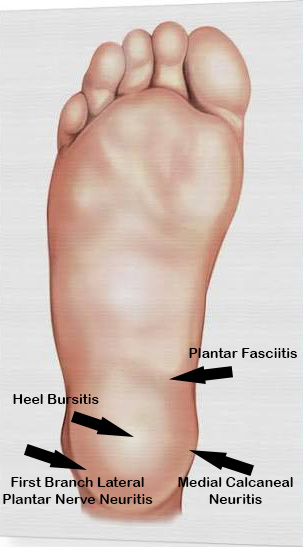
Heel pain is often treated as though one diagnosis explains every symptom. In clinical practice, discomfort beneath or around the heel may reflect more than one contributing problem. Plantar fascia strain, heel-pad sensitivity, nerve irritation, Achilles insertional stress, and altered foot mechanics can overlap. Recognizing the pattern matters because treatment directed at only one source may leave other symptoms unchanged.
Look Beyond the Location of Pain
The exact location and timing of pain provide useful clues. Pain under the heel with the first steps after rest may suggest plantar fascia involvement. Pain at the back of the heel may relate to the Achilles tendon or shoe pressure. Burning, tingling, or radiating symptoms may raise concern for nerve irritation. A tender, bruised feeling in the center of the heel can involve the heel pad. These patterns are clues—not a substitute for clinical evaluation. Each of these conditions require a different approach in an orthotic. Plantar fasciitis arrow is the most common location of pain. A normal fitting orthotic usually controls the pain. Heel bursitis is located right under the heel, For this condition we make a normal fitting orthotic but cut a hole in the shell and put in a poron plug to not only control the arch but absorb shock directly under the heel. Medial Calcaneal Neuritis needs softness and a lower media shell so as not to irritate the nerve. First Branch Lateral Nerve Neuritis needs the same but it is the lateral shell we lower.
Why a Biomechanical Evaluation Matters
A careful assessment considers the patient's history, footwear, activity level, foot structure, joint motion, gait, and precise sites of tenderness. The goal is to identify factors increasing tissue stress and distinguish mechanical pain from conditions requiring a different medical approach.
How Orthotics May Fit Into a Treatment Plan
When abnormal loading or foot mechanics contribute to symptoms, a properly prescribed custom orthotic may help support the arch, stabilize the heel, or redistribute pressure. The design should match clinical findings rather than rely on a one-size-fits-all insert. Orthotics are one part of care and may be combined with footwear changes, stretching, activity modification, or other clinician-recommended treatment.
Persistent, severe, unexplained, or worsening heel pain deserves professional assessment—especially with significant swelling, redness, fever, numbness, an open wound, or difficulty bearing weight.
Click here to read the full article: Heel Pain and the Proper Diagnosis