 Orthotics4U
Understanding Pronation: How Foot Mechanics Can Affect the Ankles, Knees and Hips
Published on November 19, 2026 | By Dr. Milton J. Stern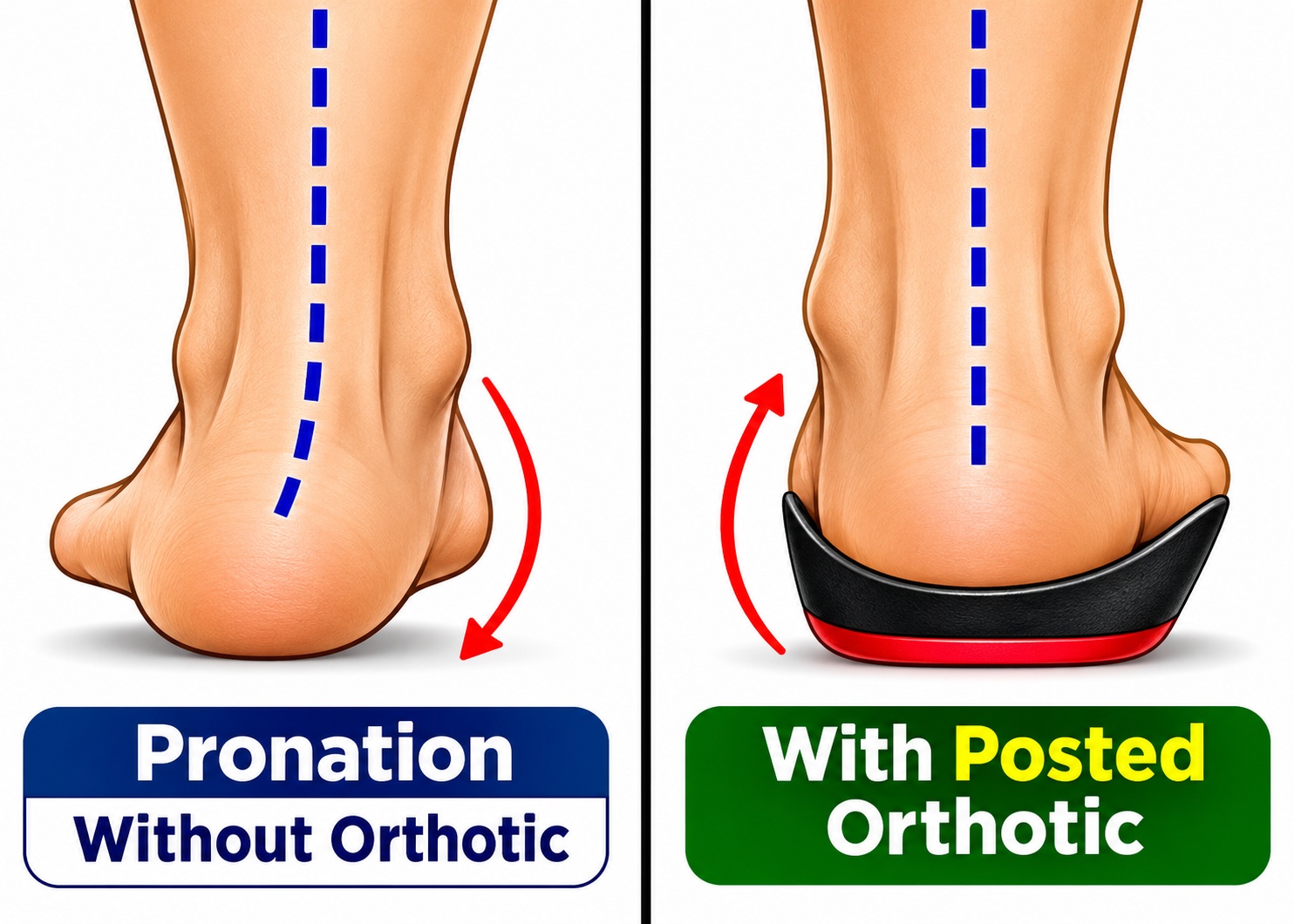
Pronation is a normal part of how the foot adapts to the ground during walking. It helps the foot accommodate surfaces and absorb forces. Problems can arise when the amount, timing, or control of motion is not well suited to an individual's structure and activity. Understanding the difference between normal movement and a potentially problematic pattern is an important part of a biomechanical evaluation.
Pronation Is Normal—The Context Matters
The foot is not meant to remain completely rigid during every step. It moves and adapts as weight is accepted, then becomes more stable as the body progresses forward. Pronation describes a combination of movements within the foot and is part of normal gait.
Seeing a foot roll inward does not automatically mean that something is wrong. The clinician considers how much movement occurs, when it occurs, whether the foot resupinates appropriately, whether the pattern is painful, and how it relates to the person's structure and activity.
When Mechanics May Contribute to Symptoms
In some individuals, excessive or poorly controlled pronation may be associated with increased strain on structures in the foot and lower limb. Depending on the person, symptoms may involve the arch, plantar fascia, ankle, or other areas. The relationship between foot motion and knee or hip symptoms is complex; alignment changes do not prove that the foot is the sole cause of pain.
Foot mechanics are only one part of the picture. Strength, flexibility, training load, footwear, previous injury, joint conditions, and other health factors may also contribute. A good assessment avoids assuming that every knee, hip, or back problem begins in the feet.
What a Biomechanical Examination Can Identify
A clinician may assess heel position, arch shape, joint range of motion, rearfoot and forefoot relationships, muscle function, and gait. The examination also considers symptoms, footwear, activity, and whether the observed movement is flexible or more fixed.
These findings help determine whether a mechanical factor is relevant and whether an orthotic might reasonably address it. The goal is not to force every foot into an identical position. The goal is to select an approach that fits the person's anatomy, symptoms, and functional needs.
How Custom Orthotics May Help
When examination findings indicate that foot mechanics contribute to symptoms, a prescribed orthotic may provide support, help manage excessive motion, or redistribute pressure. The features depend on the individual prescription. Some people need a supportive design; others need an accommodation or a different treatment altogether.
Orthotics are not a cure-all and should not be expected to correct every problem higher up the kinetic chain. They may be one part of a plan that includes appropriate shoes, strengthening, mobility work, gradual activity progression, and other care recommended by a healthcare professional.
A Practical Takeaway
Do not diagnose pronation by looking at a footprint or the wear pattern on a shoe alone. If foot pain or recurring lower-limb symptoms are affecting your activities, a comprehensive evaluation can help clarify whether foot mechanics are involved and what options make sense.
Educational information on this page is not a substitute for an individual medical examination, diagnosis, or treatment. The appropriateness of an orthotic depends on the person's clinical findings.